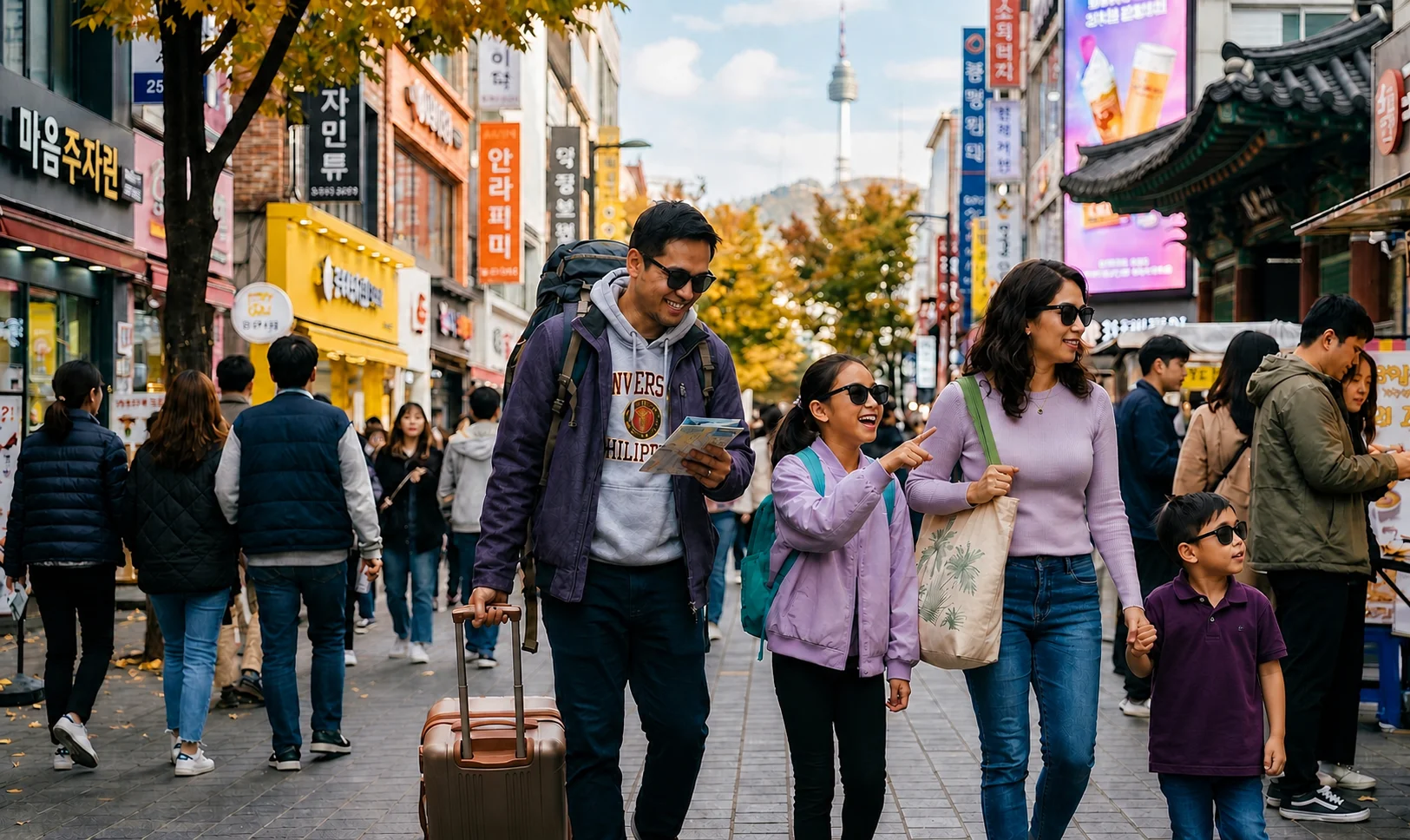
What to Expect When Budgeting Your South Korea Trip
Planning a trip to South Korea from the Philippines involves more than just booking flights and creating an itinerary. Round-trip airfare typically ranges from PHP 7,000 to PHP 35,000 or more, based on data from booking platforms such as Skyscanner and Google Flights, depending on season, airline, and how early you book.
Based on typical 4D3N to 7D6N travel itineraries, a South Korea trip from the Philippines can cost anywhere from PHP 20,400 to over PHP 230,000, depending on your travel style, duration, and spending habits. Key expenses include airfare, accommodation, food, transportation, and activities.
This guide provides a comprehensive breakdown of travel costs for Filipino travelers, covering short stays to extended trips. Whether you are planning a quick 4-day city visit or a full week exploring multiple destinations, this article outlines realistic expenses in Philippine Pesos (PHP).
You will also find practical tips, visa guidance, and real-world budget examples to help you prepare with confidence. If you are planning your trip from scratch, read our complete guide on exploring South Korea for Filipino travelers for a step-by-step overview.
To better understand how these costs are structured, it’s helpful to break them down by travel style and trip duration.
South Korea Trip Cost Overview
Travel costs vary depending on your travel style and preferences. For clarity, expenses are grouped into three categories:
Budget: Hostels, public transport, affordable meals
Mid-range: 3-star hotels, mixed transport, casual dining
High-end: Luxury hotels, private transfers, premium experiences
The following breakdown starts with shorter trips, which are ideal for first-time visitors or quick getaways.
4 Days 3 Nights (4D3N) Budget Breakdown
This itinerary is ideal for a short stay in Seoul or a focused trip such as shopping or K-pop tourism.
Estimated Cost Breakdown (PHP)
Category
|
Budget
|
Mid-range
|
High-end
|
|---|
Flights
|
7,000 – 12,000
|
12,000 – 18,000
|
18,000 – 35,000+
|
Accommodation
(3 nights)
|
4,500 – 7,500
|
7,500 – 15,000
|
15,000 – 30,000+
|
Visa Fee
|
900 – 1,500
|
900 – 1,500
|
900 – 1,500
|
Local Transport
|
1,500 – 2,500
|
2,500 – 4,000
|
4,000 – 8,000
|
Food
|
3,000 – 5,000
|
5,000 – 9,000
|
9,000 – 15,000
|
Activities
|
1,000 – 3,000
|
3,000 – 6,000
|
6,000 – 12,000
|
Travel Insurance
|
500 – 1,000
|
800 – 1,500
|
1,000 – 2,500
|
Shopping/Contingency
|
2,000 – 5,000
|
5,000 – 10,000
|
10,000 – 20,000+
|
Total Estimated Cost
Travel Style
|
Total Cost (PHP)
|
|---|
Budget
|
20,400 – 37,500
|
Mid-range
|
36,700 – 65,000
|
High-end
|
64,900 – 124,500+
|
Disclaimer: Estimates exclude the Philippine travel tax (PHP 1,620) and may vary based on season, exchange rates, and booking timing.
If you have more time, extending your trip allows for a more balanced itinerary with additional destinations and activities.
5 Days 4 Nights (5D4N) Budget Breakdown
This is the most common itinerary, allowing time to explore Seoul and nearby destinations such as Nami Island or Suwon.
Estimated Cost Breakdown (PHP)
Category
|
Budget
|
Mid-range
|
High-end
|
|---|
Flights
|
7,000 – 12,000
|
12,000 – 18,000
|
18,000 – 35,000+
|
Accommodation
(4 nights)
|
6,000 – 10,000
|
10,000 – 20,000
|
20,000 – 40,000+
|
Visa Fee
|
900 – 1,500
|
900 – 1,500
|
900 – 1,500
|
Local Transport
|
2,000 – 3,500
|
3,500 – 5,500
|
5,500 – 10,000
|
Food
|
4,000 – 6,500
|
6,500 – 12,000
|
12,000 – 20,000
|
Activities
|
1,500 – 4,000
|
4,000 – 8,000
|
8,000 – 15,000
|
Travel Insurance
|
600 – 1,200
|
900 – 1,800
|
1,200 – 2,800
|
Shopping/Contingency
|
3,000 – 6,000
|
6,000 – 12,000
|
12,000 – 25,000+
|
Total Estimated Cost
Travel Style
|
Total Cost (PHP)
|
|---|
Budget
|
25,000 – 44,700
|
Mid-range
|
43,800 – 78,800
|
High-end
|
77,600 – 149,300+
|
Disclaimer: Costs are indicative and may increase during peak travel periods such as cherry blossom season and major holidays.
For travelers planning a longer stay, a 7-day itinerary provides greater flexibility to explore multiple cities and experiences.
7 Days 6 Nights (7D6N) Budget Breakdown
A longer stay allows for multi-city travel, such as visiting Seoul and Busan or Jeju Island.
Estimated Cost Breakdown (PHP)
Category
|
Budget
|
Mid-range
|
High-end
|
|---|
Flights
|
7,000 – 12,000
|
12,000 – 18,000
|
18,000 – 35,000+
|
Accommodation
(6 nights)
|
9,000 – 15,000
|
15,000 – 30,000
|
30,000 – 60,000+
|
Visa Fee
|
900 – 1,500
|
900 – 1,500
|
900 – 1,500
|
Intercity Travel
|
3,000 – 6,000
|
6,000 – 10,000
|
10,000 – 20,000
|
Local Transport
|
3,000 – 5,000
|
5,000 – 8,000
|
8,000 – 15,000
|
Food
|
6,000 – 10,000
|
10,000 – 18,000
|
18,000 – 30,000
|
Activities
|
2,500 – 6,000
|
6,000 – 12,000
|
12,000 – 25,000
|
Travel Insurance
|
800 – 1,500
|
1,200 – 2,500
|
1,500 – 3,500
|
Shopping/Contingency
|
5,000 – 10,000
|
10,000 – 20,000
|
20,000 – 40,000+
|
Total Estimated Cost
Travel Style
|
Total Cost (PHP)
|
|---|
Budget
|
37,200 – 67,000
|
Mid-range
|
61,100 – 109,000
|
High-end
|
108,400 – 230,500+
|
Disclaimer: Intercity travel costs vary depending on whether you use high-speed trains or domestic flights, and actual expenses depend on itinerary choices.
While these estimates provide a clear cost range, understanding what drives these expenses can help you plan your budget more effectively.
Key Cost Factors When Budgeting a South Korea Trip
Understanding the main cost drivers can help Filipino travelers plan a more accurate and realistic budget. The following factors have the biggest impact on your total travel expenses.
1. Flight Costs from the Philippines to South Korea
Airfare is typically the largest upfront expense when planning a South Korea trip. Based on typical Manila to Incheon routes, round-trip flights generally range from PHP 7,000 to PHP 35,000+, depending on the airline, season, and booking window.
Booking flights 3 to 6 months in advance can help secure lower fares, especially with seat sales from low-cost carriers. However, promo fares often exclude baggage, meals, and seat selection, which can increase the final cost.
Travel periods such as cherry blossom season (March to April), summer (June to August), and major holidays can significantly increase airfare prices due to high demand. If you are planning a seasonal trip, read our guide on winter travel in South Korea to better understand weather conditions and peak travel periods.
2. Accommodation Costs in South Korea
Accommodation costs vary based on location, property type, and level of comfort. Staying in central areas like Seoul typically comes at a premium compared to outer districts.
Budget options: Hostels and guesthouses, ideal for solo travelers
Mid-range hotels: Offer privacy, convenience, and accessible locations
Luxury hotels: Provide premium amenities and central access to major attractions
Booking early and comparing platforms can help secure better rates, especially during peak seasons.
3. Transportation Expenses
South Korea has a highly efficient and well-connected public transportation system, making it easy to travel within cities and across regions.
Subways and buses are reliable and cost-effective
A T-Money card simplifies payments and offers convenience for daily travel
Taxis are widely available but more expensive than public transport
For longer itineraries, intercity travel via KTX high-speed trains or domestic flights is often necessary and should be factored into your budget. You can read our guide on how to book KTX train tickets in South Korea to plan your intercity travel more efficiently.
4. Food and Daily Expenses
Food costs in South Korea depend on your dining preferences and daily habits. Budget travelers can manage expenses by combining affordable options with occasional restaurant meals.
Convenience stores and street food offer low-cost meals
Local restaurants provide good value for traditional Korean dishes
Fine dining significantly increases daily spending
A reasonable daily budget for food, transport, and small expenses is around PHP 1,300 to PHP 2,200 for budget travelers.
5. Activities and Attraction Fees
Most cultural sites such as palaces, museums, and public attractions have relatively affordable entrance fees. However, overall activity costs can increase depending on your itinerary.
Higher-cost experiences may include:
Planning your itinerary in advance helps prioritize activities and manage expenses effectively. If you are visiting during colder months, explore our guide on places to visit in South Korea during winter to plan your itinerary more efficiently.
6. Travel Insurance for South Korea Trips
Travel insurance is an essential part of trip planning and is often required for visa applications. It provides financial protection against unexpected events that may disrupt your travel plans.
For South Korea trips, Oona Travel Insurance offers three plan options depending on your coverage needs and budget. For a typical 5-day trip, premiums start from:
Travel Lite: From ₱446 with coverage up to ₱1,000,000
Travel Premier: From ₱620 with coverage up to ₱2,500,000
Travel Elite: From ₱957 with coverage up to ₱5,000,000
These plans include benefits such as medical expenses and hospitalization, trip cancellation and curtailment, delayed departure, baggage protection, personal liability, and 24/7 worldwide travel assistance.
Compared to total trip costs that can exceed PHP 20,000 to PHP 200,000, travel insurance represents a small but essential expense that protects you from significantly higher financial risks.
Once you have a clear idea of your budget, the next step is preparing the essential documents and travel requirements.
Essential Pre-Trip Checklist
Before traveling to South Korea, make sure all key requirements are prepared in advance to avoid delays or issues at the airport.
Pre-Trip Requirements for Filipino Travelers
Requirement
|
Details
|
Notes
|
|---|
Passport Validity
|
At least 6 months from date of travel
|
Required for entry
|
South Korean Visa
|
Approved tourist visa (C-3)
|
Apply 1–2 months in advance
|
Flights & Accommodation
|
Round-trip ticket and confirmed bookings
|
May be required for visa application
|
Travel Insurance
|
Valid coverage for entire trip duration
|
Often required for visa approval
|
Philippine Travel Tax
|
PHP 1,620
|
Paid at airport or online
|
Currency (KRW)
|
Korean Won for initial expenses
|
For transport, food, small purchases
|
T-Money Card
|
Reloadable transport card
|
Used for buses and subways
|
Internet Access
|
Pocket Wi-Fi or local SIM card
|
Recommended for navigation and communication
|
Health Documents
|
As required by current travel advisories
|
Check latest guidelines before departure
|
Disclaimer: Requirements may change depending on government regulations and travel advisories. Always verify the latest guidelines with official sources such as the Embassy of the Republic of Korea in the Philippines and relevant Philippine government agencies before your trip.
One of the most important requirements for Filipino travelers is securing a tourist visa, which requires proper documentation and preparation.
Visa Application Tips for Filipinos
Visa approval depends on proper documentation. Key requirements include:
Strong financial proof and stable ties to the Philippines improve approval chances. For a step-by-step process and updated requirements, read our guide on how to apply for a Korean tourist visa in the Philippines. Always verify requirements with official embassy sources.
Real-World Budget Examples
To put these costs and requirements into perspective, here are sample budgets based on real travel scenarios.
Example 1: Solo Budget Traveler (5D4N)
This is the most popular itinerary, allowing time for Seoul plus a nearby day trip such as Nami Island or Suwon. If you need a detailed plan, read our guide on a 5-day South Korea itinerary for Filipino travelers.
Cost Breakdown (PHP)
Expense Category
|
Cost (PHP)
|
|---|
Flights
|
8,500
|
Accommodation
|
6,500
|
Transportation
|
2,500
|
Food
|
4,500
|
Activities
|
1,500
|
Visa, Insurance, Tax
|
4,020
|
Shopping/Contingency
|
3,000
|
Total
|
30,520
|
Disclaimer: This estimate assumes early booking of promo fares, hostel accommodation, and minimal paid activities. Costs may increase during peak seasons or if standard airline fares and private accommodations are used.
This example reflects a minimalist travel approach, where careful planning helps keep expenses low.
Example 2: Mid-Range Travel (Couple, 7D6N)
A pair of travelers seeking comfort and convenience, with a mix of public and private transport, hotel stays, and paid activities.
Cost Breakdown (PHP)
Expense Category
|
Cost (PHP)
|
|---|
Flights
|
28,000
|
Accommodation
|
30,000
|
Intercity Travel
|
10,000
|
Local Transportation
|
8,000
|
Food
|
24,000
|
Activities
|
10,000
|
Visa, Insurance, Tax
|
8,040
|
Shopping/Contingency
|
20,000
|
Total (for 2 Pax)
|
138,040
|
Disclaimer: This estimate assumes mid-range hotel stays, standard airfare, and paid tours or attractions. Prices may vary depending on hotel location, transport choices, and seasonal demand.
This scenario represents a balanced travel experience, combining comfort with moderate spending. Beyond budgeting for your trip, it is equally important to consider how to protect yourself from unexpected expenses.
Why Travel Insurance Matters
Even with careful planning, unexpected situations can still happen when traveling abroad. Medical emergencies, flight disruptions, or lost baggage can quickly lead to unplanned expenses that may significantly impact your trip.
Travel insurance helps protect you from these financial risks by providing coverage for:
Medical emergencies and hospitalization overseas
Flight delays, cancellations, and trip interruptions
Lost, stolen, or delayed baggage
For Filipino travelers, travel insurance to South Korea is not only commonly required for visa applications but also serves as a practical safeguard against costly disruptions.
With Oona Travel Insurance, you can get comprehensive coverage at an affordable cost, with plans designed to match different travel needs and budgets. Whether you are taking a short city break or a longer multi-city trip, having the right protection allows you to travel with greater confidence.
A small upfront cost can help prevent significantly higher expenses in case of emergencies, making travel insurance one of the most important parts of your travel preparation. With the right preparation and protection in place, you can move forward with planning your trip more confidently.
Planning Your South Korea Trip Budget
A trip to South Korea is achievable for Filipino travelers with proper planning and budgeting. While total costs can vary significantly depending on your travel style and itinerary, having a clear estimate allows you to make informed financial decisions before your trip.
Whether you are traveling on a limited budget or planning a more comfortable experience, understanding key cost components such as flights, accommodation, and daily expenses helps you allocate your resources effectively.
Preparation remains essential to a smooth and enjoyable journey. By organizing your travel requirements in advance and setting a realistic budget, you can focus on exploring South Korea with confidence instead of worrying about unexpected costs.