How to Apply for a Korean Tourist Visa from the Philippines (2026)
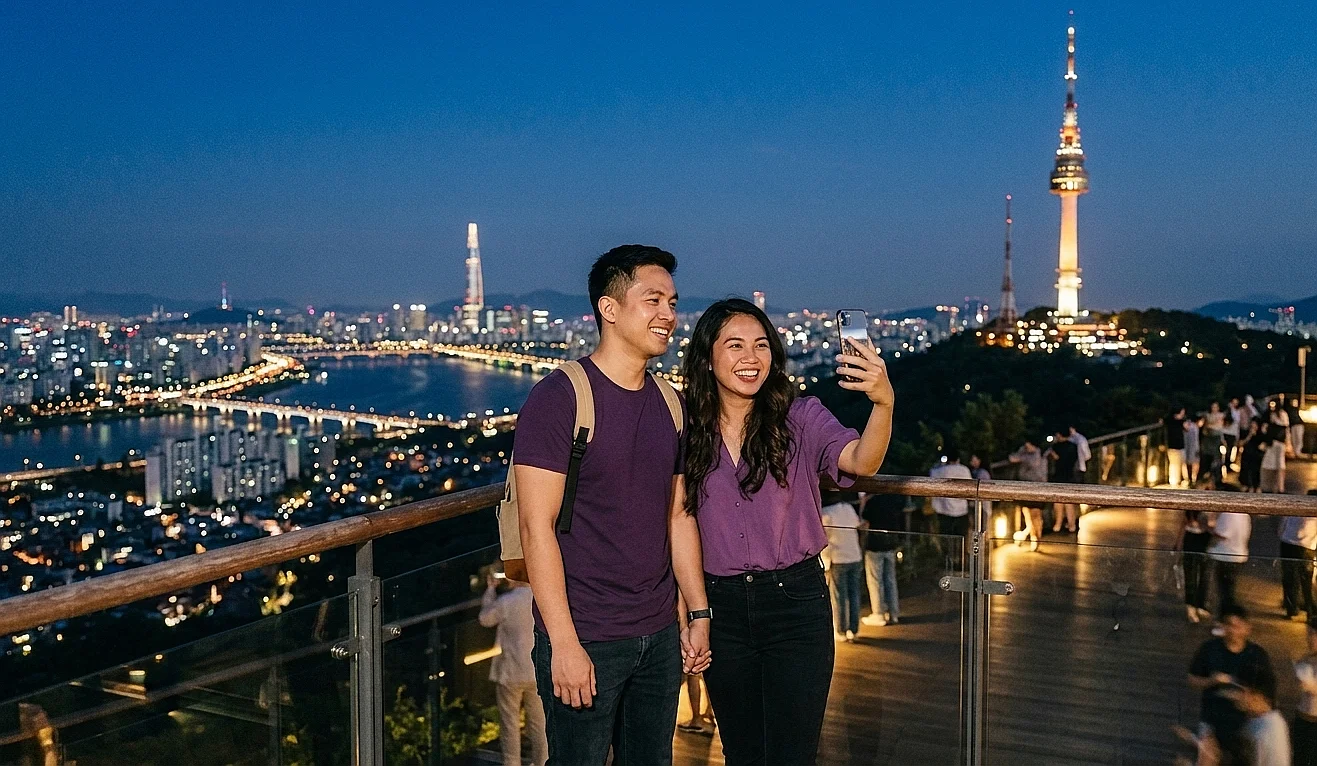
South Korea continues to be a high-interest destination for Filipino travelers, especially for K-culture, food, shopping, winter trips, and cherry blossom season. According to Inquirer, Filipino arrivals reached 531,099 in 2024, exceeding the pre-pandemic figure of 516,503 recorded in 2019.
This growing demand also means visa preparation matters more, especially during peak travel months. Before Filipino tourists can explore Seoul, Busan, Jeju, or other Korean destinations, they must first secure the proper tourist visa.
This guide walks you through the Korean tourist visa application process from the Philippines, including requirements, timelines, financial documents, and practical reminders for first-time applicants. If you want a deeper understanding of visa requirements, fees, and eligibility, you can read our complete South Korea visa requirements guide for Filipinos.
In this guide:
Visa types available for Filipinos
Step-by-step application process
Required documents and financial proof
Common mistakes and how to avoid them
FAQs for first-time applicants
Before starting your application, it is important to understand whether a visa is required and what this means for Filipino travelers.
Do Filipinos Need a Tourist Visa for South Korea?
Yes. All Philippine passport holders are required to secure a tourist visa before traveling to South Korea for leisure purposes. At present, visa-free entry is not available for Filipinos, regardless of travel history or destination within Korea. This means every traveler must go through the standard application process before departure.
For first-time applicants, this requirement may seem strict. However, with proper preparation and complete documentation, approval is achievable. The key is to demonstrate clear travel intent, financial capacity, and strong ties to the Philippines. Once you confirm the visa requirement, the next step is choosing the appropriate visa type based on your travel plans.
Types of Korean Tourist Visas
Before starting your application, it is important to understand which visa type fits your travel plans.
Korean Tourist Visa Options
Visa Type
|
Validity
|
Stay Duration
|
Best For
|
|---|
Single Entry Visa
|
3 months
|
Up to 59 days
|
First-time travelers
|
Multiple Entry Visa
|
1–5 years
|
Up to 59 days per visit
|
Frequent travelers
|
Disclaimer: Information in this table is for general reference only. Visa validity, stay duration, and eligibility may vary depending on embassy assessment and applicant profile. Always verify directly with the Korean Embassy or your accredited travel agency.
How to Choose the Right Visa
Single Entry Visa is the most common option for first-time Filipino travelers. It allows one visit within the validity period.
Multiple Entry Visa is typically granted to applicants with strong travel history, stable financial records, or prior visas from OECD countries.
In most cases, applicants cannot choose which visa will be granted. The embassy makes the final decision based on your submitted documents and overall profile. After understanding your visa options, you can begin preparing your application by following a structured step-by-step process.
Step-by-Step Guide to Applying for a Korean Tourist Visa
Once you understand the visa types and requirements, the next step is to prepare your documents and begin the application process.
Step 1: Prepare Your Basic Requirements
Submitting complete and accurate documents is essential to avoid delays or possible denial. Start by organizing your core requirements:
Primary Documents Checklist
Document
|
Key Notes
|
|---|
Philippine Passport
|
Must be valid for at least 6 months
|
Visa Application Form
|
Properly filled out and signed
|
Passport Photo
|
White background, recent
|
PSA Birth Certificate
|
Must be clear and readable
|
Bank Certificate
(with ADB)
|
Shows financial capacity
|
Bank Statements
|
Last 6 months, consistent activity
|
Flight Itinerary
|
Reservation only, not required to be paid
|
Hotel Booking
|
Confirmed accommodation
|
Cover Letter
|
Explains purpose and travel plans
|
Disclaimer: Information in this table is for general reference only. Document requirements may vary depending on embassy updates, agency instructions, and applicant profile. Always verify directly with the Korean Embassy or your accredited travel agency before submission.
Once your basic documents are complete, you will need to gather additional requirements based on your employment or financial status.
Important Reminders:
Ensure all documents are consistent in details such as name, employment, and dates
Avoid missing pages or unclear copies
Incomplete submissions remain one of the most common reasons for rejection
Step 2: Prepare Supporting Documents Based on Your Status
Beyond the basic requirements, additional documents depend on your employment or financial situation.
Supporting Documents by Applicant Type
Applicant Type
|
Required Documents
|
|---|
Employed
|
Certificate of Employment, Approved Leave Form, Company ID
|
Self-Employed
|
DTI/SEC Registration, Mayor’s Permit, ITR
|
Student
|
School Certificate, School ID, Sponsor Documents
|
Sponsored
|
Sponsorship Letter, Sponsor’s Financial Docs, Proof of Relationship
|
Disclaimer: Information in this table is for general reference only. Supporting documents may vary depending on your employment status, source of funds, sponsorship arrangement, and agency requirements. Always verify directly with your accredited travel agency.
Key Tips:
All documents must be verifiable and up to date
Financial and employment records should align with your bank statements
If sponsored, clearly show the relationship and financial capability of your sponsor
Consistency across documents strengthens your application. After preparing all required documents, the next step is to submit your application through the proper channel.
Step 3: Submit Through an Accredited Agency
Filipino applicants cannot apply directly at the Korean Embassy. All applications must be submitted through accredited travel agencies authorized by the embassy.
What this means:
Choose a trusted, accredited agency
The agency will review and submit your documents
They act as the official intermediary between you and the embassy
This process helps standardize applications and reduce submission errors. With your agency selected, you can proceed with the official submission process.
Step 4: Submit Your Application
Once your documents are complete, proceed to your chosen agency.
At the agency, you will:
Submit all required documents
Pay the visa processing fee
Receive an official receipt
Be given a tentative release date
Additional notes:
After submission, your application enters the processing stage.
Step 5: Wait for Processing
Processing timelines depend on application volume, seasonality, and document completeness.
Processing Timeline Guide
Processing Type
|
Estimated Time
|
When It Applies
|
|---|
Regular
|
7–15 working days
|
Lean travel months
(typically May–October, excluding major holidays)
|
Peak Season
|
Up to 3 weeks
|
High-demand periods:
March–April (cherry blossom) and November–February (winter season)
|
Disclaimer: Information in this table is for general reference only. Processing timelines may vary depending on application volume, peak season, embassy operations, and agency handling time. Always verify directly with your accredited travel agency.
What Filipino Applicants Should Know About Processing Times
While the Korean Embassy does not publish official average processing data specific to Filipino applicants, accredited agencies in the Philippines use the timelines above as standard guidance.
Delays are more likely during peak travel seasons, especially when application volume increases or additional verification is required.
Key factors that can affect processing time:
Volume of applications during peak months
Completeness and accuracy of submitted documents
Additional document verification by the embassy
Agency handling time before submission
Practical Advice
Apply at least 4–6 weeks before your intended travel date
Expect longer processing during peak seasons
Ensure documents are complete to avoid delays
Avoid unnecessary follow-ups unless timelines are exceeded
Once processing is complete, the final step is to receive your passport and check your visa details.
Step 6: Claim Your Passport
After processing, your passport will be returned through your chosen agency.
If approved, you will receive:
If denied:
Careful preparation and complete documentation significantly improve your chances of approval. Beyond document submission, one of the most common concerns among applicants is financial requirements.
How Much Bank Balance Is Needed?
There is no officially prescribed minimum bank balance set by the Korean Embassy. However, applicants are expected to demonstrate sufficient financial capacity to support their trip, based on the length of stay and overall travel plans.
Below is a general guideline often followed by Filipino applicants:
Travel Length
|
Suggested Balance
|
|---|
3–5 Days
|
₱100,000+
|
6–7 Days
|
₱150,000–₱200,000
|
8–10 Days
|
₱250,000+
|
Disclaimer: Information in this table is for general reference only. Actual financial requirements may vary depending on the applicant’s profile, travel history, and overall documentation. The embassy evaluates each application individually and does not guarantee approval based on bank balance alone.
More than the amount itself, the embassy looks at whether your funds appear stable, consistent, and aligned with your declared trip. This is why regular account activity and clear income records matter. However, not all applicants are required to submit the same financial documents. For 2026, the Korean Embassy has extended simplified requirements for selected Filipino applicants who meet specific conditions.
Who Can Skip Financial Documents for Korea Visa in 2026?
In a significant update, the Embassy of the Republic of Korea in the Philippines has extended simplified visa requirements from January 1 to December 31, 2026.
Under this policy, certain Filipino applicants may be exempt from submitting financial documents, including:
Bank certificate
Bank statements
Income Tax Return (ITR)
This exemption can make the process easier for qualified applicants, but it does not remove the need to submit the rest of the standard visa requirements. To check whether you qualify, review the applicant categories covered by the 2026 simplified requirements.
Eligible Applicants for Financial Document Exemption
Category
|
Who Qualifies
|
Key Requirements
|
|---|
Elected Politicians
|
Senators, Congress members, governors, mayors, and provincial officials
|
Certificate of appointment or employment; proof of relationship for family members
|
Government Officials
|
Assistant Secretary level and above, including AFP and PNP ranks (Brigadier General and higher)
|
Certificate of employment with full details
|
Licensed Professionals
|
Doctors, dentists, lawyers, CPAs, pharmacists, veterinarians with valid PRC or IBP ID
|
Certificate of employment and valid license ID
|
Credit Card Holders
|
BDO, BPI, RCBC, Metrobank, or PNB Gold or Elite cardholders
|
Employment certificate, credit card copy, and 3 months billing statements
|
Disclaimer: Information in this table is for general reference only. Eligibility, document requirements, and exemptions may change depending on embassy policy updates. Always verify directly with the Korean Embassy or your accredited travel agency.
Before relying on this exemption, make sure you understand the conditions that apply to family members, dependents, and credit card holders.
Important Notes for Applicants
The exemption also applies to immediate family members, including parents, spouse, and minor children
Adult children may qualify if they can provide proof of student status
Proof of relationship is still required for dependents
Supplementary credit card holders are not eligible under this policy
For qualified travelers, this update can reduce paperwork and make the application process more convenient. Still, it should be treated as an exemption, not an approval guarantee.
What This Means for Filipino Travelers
This update simplifies the visa process for qualified applicants by reducing the need for financial documentation. However, approval is still based on overall evaluation, including employment, travel intent, and supporting documents.
Whether you are submitting standard financial documents or applying under an exemption, accuracy and consistency remain essential. The next section covers the most common mistakes Filipino applicants should avoid.
Common Mistakes to Avoid
A significant number of visa denials stem from issues that are entirely avoidable. Paying close attention to detail and ensuring document integrity can make a meaningful difference in your application outcome.
Common Errors Filipino Applicants Should Avoid:
Submitting falsified or altered documents
Making large, unexplained last-minute bank deposits
Providing incomplete or inconsistent employment records
Booking non-refundable flights before visa approval
Writing vague, generic, or unclear cover letters
Even small inconsistencies across documents can raise concerns during evaluation. Accuracy, consistency, and transparency are critical throughout the process. In addition to avoiding errors, it is helpful to understand how the embassy evaluates applications.
Embassy Reminders
Based on official guidance from the Korean Embassy, applicants should keep the following in mind:
Visa approval is assessed on a case-by-case basis
Financial capacity and proof of funds are key evaluation factors
Travel history can support your application but is not mandatory
All submitted documents must be authentic and verifiable
Providing false or misleading information may impact future visa applications
These reminders reinforce the importance of submitting a complete and honest application. Aside from official guidelines, real-world applicant experiences can offer practical insights.
Insights from Filipino Applicants
Based on recurring patterns shared in Filipino travel communities, several practical insights can help improve preparation and reduce application risks:
Practical Insights from Applicants
Insight
|
What It Means for Your Application
|
|---|
Stable Income Over High Savings
|
Consistent cash flow and employment history are often viewed more favorably than large one-time balances
|
Clear Travel Itinerary
|
A well-defined plan (dates, locations, activities) strengthens credibility
|
Organized Documents
|
Properly arranged and complete requirements improve processing confidence
|
Early Application
|
Applying ahead of time helps avoid delays, especially during peak seasons
|
Disclaimer: Information in this table is for general reference only. These insights are based on aggregated applicant experiences and do not guarantee visa approval. Final decisions are made solely by the embassy based on individual assessment.
While these are not official requirements, they reflect common trends among Filipino applicants and can help you prepare a more reliable and well-documented application. Before final submission, it is helpful to review everything one last time.
Pre-Submission Checklist
Before submitting your application, take a final review to ensure everything is complete, consistent, and ready for evaluation. This step helps minimize delays and avoid preventable issues.
Final Checklist Before Submission:
All required documents are complete and properly filled out
Financial records show consistent and legitimate activity
Personal details (name, birthdate, employment) match across all documents
Travel plans are clear, realistic, and well-documented
Required copies and original documents are prepared according to agency guidelines
Taking a few extra minutes to review your documents can significantly improve your application’s overall quality. Once your application is ready, it is also worth preparing for your trip beyond visa approval.
Why Travel Insurance Matters for Korea Trips
While travel insurance is not always required for visa approval, it plays a critical role in protecting your trip from unexpected risks. For Filipino travelers heading to South Korea, having the right coverage is not just a precaution. It is a practical part of responsible travel planning.
Medical care in South Korea is known for its quality, but it can also be expensive for foreign visitors. A single emergency or hospital visit can quickly disrupt both your itinerary and your budget. This is where having reliable protection becomes essential.
With travel insurance, you can be covered for:
Medical emergencies and hospitalization abroad
Trip cancellations or sudden itinerary changes
Flight delays and missed connections
Lost, delayed, or damaged baggage
Beyond financial protection, travel insurance gives you peace of mind. It allows you to focus on your experience, whether you are exploring Seoul, visiting Busan, or traveling during peak seasons like winter or cherry blossom.
Why Choose Oona Travel Insurance for Your Korea Trip
Oona Travel Insurance is built for Filipino travelers who value convenience, clarity, and dependable protection when traveling abroad. Whether it is your first time visiting South Korea or a return trip, having the right coverage helps you travel with greater confidence.
Here is what sets Oona apart:
Fast and easy online application with a fully digital process and no unnecessary paperwork
Comprehensive coverage designed for international trips, including medical emergencies and travel disruptions
Transparent plans so you clearly understand your benefits, inclusions, and limits
Responsive 24/7 support to assist you when unexpected situations arise during your trip
From short vacations to extended stays, Oona helps you stay prepared without complicating your travel plans. It is a practical way to protect both your itinerary and your budget.
Travel with confidence knowing you have reliable coverage in place. Explore your South Korea travel insurance coverage options from Oona today. With both your visa and travel protection in place, you are almost ready for your trip.
Turn Your Korea Trip Plans into Reality
Applying for a Korean tourist visa from the Philippines may seem detailed at first, but it becomes much more manageable when you understand what the embassy looks for and prepare accordingly.
The most successful applications are built on three key factors. These include complete and accurate documents, consistent financial records, and a clear and well-planned itinerary. Together, these elements help demonstrate credibility and can significantly improve your chances of approval.
With the right preparation and timeline, many Filipinos successfully secure their visas every day. Start early, stay organized, and approach the process with clarity.
Once your visa is approved, the next step is making sure your South Korea trip is protected from unexpected disruptions. Planning ahead not only increases your approval chances but also helps you travel with greater confidence from start to finish.