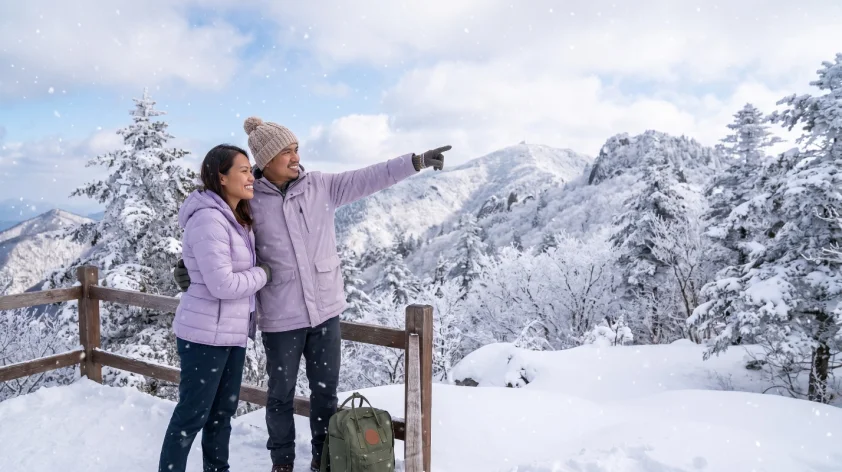
1. Taiwan – Hehuanshan: Close Enough for a Surprise
For the traveler who wants something close and unexpected, Hehuanshan is one of Taiwan’s best bets for a taste of snow. It rises above 3,000 meters and is known for winter snow scenery. Taiwan’s official forest and park authorities also highlight its accessibility.
Hehuanshan is appealing because the experience is not limited to skiing. You can drive into the high-mountain area, take short walks, look for snow or frost when conditions allow, and stay for starry skies. Official tourism information notes that temperatures can be dramatically colder than on the plains.
Travel tip: Snow is never guaranteed. During the 2026 snow season, authorities implemented traffic controls on parts of the Hehuanshan road depending on real-time conditions. Check road advisories and weather updates before leaving and prepare warm layers and proper footwear.
2. Vietnam – Sapa: A Budget-Friendly Taste of Winter
For the budget-conscious traveler who wants a taste of winter, Sapa offers a cooler mountain escape. Northern Vietnam gets chilly in winter, and Sapa’s elevation makes it especially cool and misty. Snow is occasional, while frost is more realistic.
The reward is more than the cold. Sapa sits above terraced valleys and mountain villages, with Mount Fansipan rising above the region. Vietnam Tourism highlights rice terraces, local markets, ethnic communities, and access to Fansipan.
Travel tip: Visit in the colder months with realistic expectations. A snowy day is a bonus, not a guarantee. Bring layers, a rainproof outer shell, and shoes that can handle wet or slippery streets and trails.
3. Japan – Tohoku: Snow Without the Usual Hokkaido Focus
For the Japan lover who wants snow without building the trip around Hokkaido, look north-east to Tohoku. The region spans six prefectures on Honshu and receives substantial snowfall.
JNTO describes Tohoku as a lesser-explored winter region, with deep snow from around November into spring and generally less crowding than Japan’s best-known snow destinations. It suits travelers who want snow, hot springs, small towns, and mountain scenery without following the most familiar route.
Look for: Zao Onsen’s snow-covered “snow monsters,” Aomori’s Hakkoda area, Nyuto Onsen in Akita, and Yamagata’s snowy mountain-and-onsen circuit.
Travel tip: Plan around one or two bases rather than trying to cover all of Tohoku. Snow can make travel slower, and the region is large. Rail connections are useful but always check winter operating conditions before heading into mountain areas.
4. China – Beyond Harbin: Go Further into the Northeast
Harbin may be China’s most famous winter destination, but it is not the only option. For a more nature-focused experience, look to Jilin Province, especially Changbai Mountain and Jilin City’s rime landscapes.
Changbai Mountain combines snow-covered forests, volcanic scenery, hot springs, waterfalls, and Tianchi Lake. Jilin’s 2026 winter-tourism strategy continues to position the Changbai Mountain area as a major winter zone, while the province’s 2025–26 snow season highlights its expanding snow and ice tourism infrastructure.
Jilin City offers another visual highlight: rime. The 2025–26 winter season launched alongside the 31st Jilin Rime Ice and Snow Festival, reinforcing rime as one of the city’s signature cold-weather attractions.
Travel tip: Expect serious cold. This is not the place for a light jacket and sneakers. Build your itinerary around winter transport, warm accommodations, and enough time for weather-related changes.
Destination
|
Why Go
|
Winter Highlights
|
Best For
|
|---|
Hehuanshan, Taiwan
|
A relatively close mountain escape from the Philippines
|
Snow, frost, high-altitude scenery, starry skies
|
First-time snow seekers
|
Sapa, Vietnam
|
Chilly highlands with culture and mountain scenery
|
Misty valleys, Fansipan, frost and occasional snow
|
Budget-conscious travelers
|
Tohoku, Japan
|
Deep snow with a less typical Japan itinerary
|
Snow monsters, onsens, winter festivals, powder snow
|
Japan lovers seeking a different route
|
Jilin / Changbai Mountain, China
|
A more dramatic Northeast Asian winter experience
|
Snow forests, rime, hot springs, Tianchi Lake
|
Serious winter scenery and photographers
|
When Is the Best Time to See Snow?
There is no single “snow season” for all four. Hehuanshan and Sapa depend more on weather, while Tohoku and Northeast China have much more reliable winter conditions.
For all four, timing should follow the weather, not a promise of snow. Check current destination advisories, road conditions, and mountain access before traveling. In high-elevation areas, fog, ice, strong winds, and changing road conditions can quickly alter an itinerary.
What Should You Pack for an Asian Winter Trip?
Layering is more useful than bringing one bulky coat.
- Insulated jacket or warm outer layer
- Thermal or long-sleeve base layers
- Warm socks, gloves, and a beanie
- Water-resistant shoes with good grip
- Rain or windproof outer shell
- Power bank and offline copies of important travel documents
For actual snow or sub-zero conditions, use proper cold weather gear.
Do You Need Travel Insurance for a Winter Trip?
Winter trips can involve road closures, baggage delay or loss of baggage, and outdoor activity risks. Travel insurance can help with eligible medical emergencies, trip delay or trip cancellation, and other covered situations, depending on the policy.
Oona Travel Insurance offers travel plans for eligible international destinations, with benefits that can include medical emergencies, travel delays, trip cancellation, baggage protection, and 24/7 global travel assistance, subject to the plan’s terms and availability. Check Oona Travel Insurance before booking and confirm that your destination, activities, and dates are eligible.
Planning to ski, snowboard, hike, or join other winter activities? Check the policy’s activity coverage and exclusions before your trip.
Why These Four Make a Better Winter List
The appeal is not simply that these places can get snowy. Each changes what a winter trip can look like for a Filipino traveler.
Taiwan gives you a surprising snow experience without a long-haul winter holiday. Sapa adds a budget-conscious mountain option. Tohoku expands the Japan itinerary beyond Hokkaido. China’s Northeast delivers the most dramatic snow-and-ice scenery of the four.
The best part? You do not need to start with the most obvious winter destination to have a memorable snowy escape.
Get Covered for Your Next Winter Escape
Snowy trips can mean changing weather, long transfers, outdoor activities, and non-refundable bookings. Buying travel insurance alongside your flights and accommodation gives you time to review coverage and eligibility.
With Oona Travel Insurance, you can review available plans and coverage before your trip. Always check the policy wording, exclusions, benefit limits, and current destination availability before purchase.