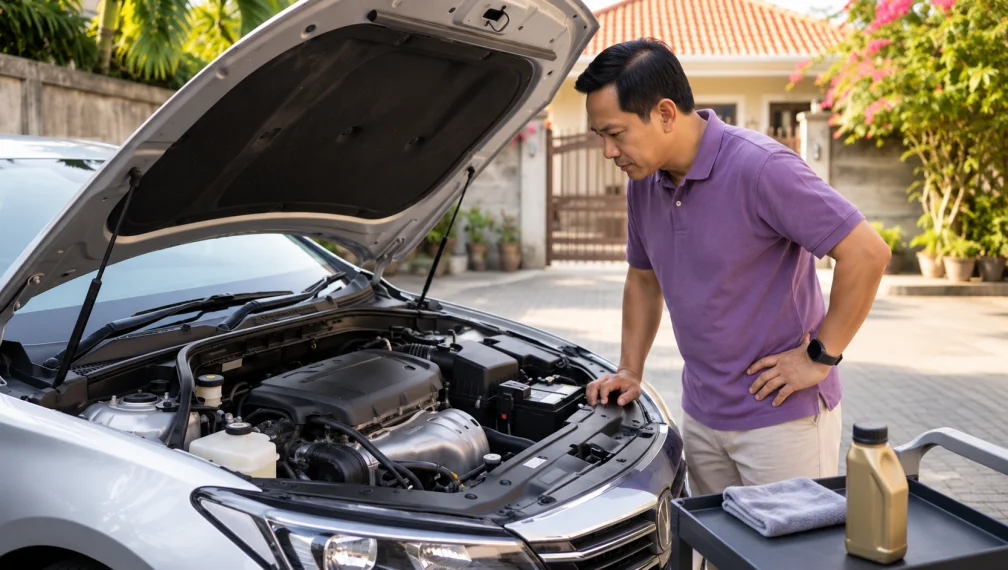
Five Car Maintenance Mistakes to Watch Out For
Here is the quick version before we break each one down.
Mistake
| Why repair costs can rise
| Better habit
|
|---|
Skip scheduled maintenance
| Wear can go unnoticed until a larger repair is needed.
| Follow the maintenance schedule.
|
Ignore warning lights, leaks, or odd sounds
| A developing problem may worsen while you keep driving.
| Investigate unusual signs promptly.
|
Neglect tires, alignment, and inflation
| Uneven wear can shorten tire life and add stress to components.
| Check pressure and tire wear regularly.
|
Use the wrong oil, fluids, or parts
| Incorrect specs can affect performance and accelerate wear.
| Use vehicle-specific specifications.
|
Choose the cheapest fix
| A temporary or incomplete fix can mean repeat work.
| Diagnose the root cause first.
|
Why Does Preventive Maintenance Matter?
Your car is made up of systems that work together. Oil keeps engine components lubricated. Coolant helps manage engine temperature. Tires affect how the vehicle contacts the road. Brakes, belts, hoses, filters, and other components all have roles that can change as a vehicle ages and accumulates mileage.
That is why maintenance is more than making the car look and feel good. It is also about spotting wear before a manageable issue turns into a more complicated one. Your vehicle maintenance manual is the best starting point for knowing what your specific vehicle needs and when.
1. Skipping Scheduled Maintenance Because the Car Still Feels Fine
One of the easiest mistakes to make is to assume that a car does not need maintenance simply because it is still running normally. Some wear happens gradually, and you may not notice a problem until the vehicle is already affected.
Routine service can include items such as oil and filter changes, inspections, tire care, brake checks, and other manufacturer-specified maintenance. The exact timing varies by vehicle, so use the recommended vehicle maintenance schedule rather than relying on a generic rule.
Why this can get expensive: skipping several small maintenance tasks at once can mean multiple issues are discovered together, increasing the number of parts and labor needed at the next service visit.
Better habit: Keep a simple service record with the date, mileage, work completed, and next recommended service. It makes it easier to spot what is due instead of relying on memory.
2. Ignoring Warning Lights, Leaks, or Strange Sounds
A dashboard warning light, fluid leak, new vibration, unusual smell, or unfamiliar noise is easy to dismiss when the car still gets you where you need to go. But these signs can be your earliest clue that something needs attention. For specific warning lights and checks, follow the guidance in your vehicle manual or consult an authorised service centre.
A warning light does not always mean a major repair is coming, but ignoring it can remove the opportunity to diagnose the issue while it is still manageable. The same goes for visible leaks or changes in how the car sounds, steers, brakes, or shifts.
Why this can get expensive: continuing to drive with an unresolved mechanical problem can allow the original issue to affect other components. A small leak, for example, is easier to address than the damage that can result from running a system low on an important fluid.
Better habit: Treat a new warning or noticeable change as a reason to check the vehicle, not as something to wait out. Consult your owner's manual and have the car inspected when appropriate.
3. Neglecting Tires, Alignment, and Inflation
Tires are easy to overlook because they are always there, but their condition has a direct effect on safety, handling, wear, and running costs. Proper tire maintenance matters because incorrect tire pressure can contribute to uneven wear, while alignment problems can cause a vehicle to pull to one side or wear tires unevenly.
As a practical baseline, LTO guidance recommends checking tire pressure when the tires are cold and before a long trip, ideally when the tires are cold. The correct pressure for your vehicle is the one listed on the vehicle's tire information label or in the owner's manual.
Why this can get expensive: letting tires wear unevenly can shorten their useful life. Alignment or suspension issues that go unaddressed can also contribute to repeated tire wear and additional service needs.
Better habit: Check tire pressure regularly, inspect tread and sidewalls, pay attention to uneven wear, and have alignment or balancing checked when symptoms or service recommendations point to it.
4. Using the Wrong Oil, Fluids, or Replacement Parts
Not every oil, coolant, brake fluid, filter, battery, or replacement part is interchangeable. A part can fit physically and still be the wrong specification for the vehicle.
Using a product that does not match the manufacturer's requirements can affect lubrication, cooling, braking, electrical performance, or component fit. Even when the mistake does not cause immediate damage, it can create performance issues or shorten component life.
Why this can get expensive: the wrong component may need to be replaced again, while an unsuitable fluid or part can contribute to wear elsewhere in the system.
Better habit: Check your owner's manual or confirm the correct specification with a qualified technician before buying a replacement product. For important systems, avoid guessing based only on price or appearance.
5. Choosing the Cheapest Fix Instead of the Right Fix
Saving money on car maintenance is sensible. Choosing a repair based only on the lowest upfront price is different. A quick workaround, low-quality part, or incomplete repair may cost less today while creating another bill later.
A good repair should address the actual cause of the problem, not just the symptom. For example, replacing a visibly worn component without checking why it failed can leave the underlying issue unresolved.
Why this can get expensive: repeat repairs mean paying for parts, labor, and downtime more than once. A poor-quality or incompatible part can also fail earlier than expected.
Better habit: Ask what caused the failure, what the repair is intended to solve, and what parts or alternatives are appropriate for your vehicle. A reliable diagnosis can be worth more than the cheapest estimate.
How to Keep Car Repair Costs From Snowballing
You do not need to become a mechanic to take better care of your car. The goal is to build a few consistent habits that make problems easier to catch early.
✓ Follow the maintenance schedule in your owner's manual.
✓ Keep a record of services, repairs, mileage, and replaced parts.
✓ Check tire pressure regularly and inspect for uneven wear or visible damage.
✓ Pay attention to dashboard warnings, leaks, unusual smells, sounds, or vibrations.
✓ Use vehicle-specific specifications for oil, fluids, filters, and replacement parts.
✓ Ask a technician to explain the cause of a problem, not just the part that needs replacing.
These habits cannot prevent every repair. Cars still experience accidents, wear, weather exposure, and unexpected failures. But catching issues early can make maintenance more predictable and help avoid preventable escalation.
Does Car Insurance Replace Regular Maintenance?
No. Maintenance and insurance serve different purposes. Maintenance is about caring for the vehicle and addressing wear or developing problems before they worsen. Insurance is designed to provide financial protection for covered losses or damage, depending on the policy and its terms.
That means keeping up with maintenance is still important even when you have car insurance. At the same time, Oona Car Insurance can provide a separate layer of financial protection for covered losses, depending on the policy. Maintenance and insurance work together: one helps you care for the vehicle, while the other can help protect you financially when a covered incident causes damage.
Before relying on any insurance benefit, review your policy's coverage, limits, deductibles, exclusions, and claim requirements. For an overview of how car insurance works in the Philippines, see Oona's Car Insurance Philippines: The Complete Guide 2026.
A Simple Car Care Routine to Follow
- Once a month: Check tire pressure when the tires are cold and look for visible tire damage or uneven wear.
- Before a longer drive: Check that lights work, look for obvious leaks, and confirm essential fluid levels are where the manufacturer recommends.
- At scheduled service: Bring your service record and tell the technician about any new sounds, smells, vibrations, or warning lights.
- After a repair: Keep the invoice, note the parts replaced, and ask when the work should be checked again.
A little consistency can go a long way. The goal is not to prevent every repair, but to make it easier to spot problems while they are still manageable.
Disclaimer: Vehicle maintenance requirements, service intervals, parts specifications, repair recommendations, and insurance coverage can vary by vehicle, usage, insurer, and policy. Always follow your vehicle manufacturer's official maintenance guidance and review your insurance policy wording for complete details.
For more guidance, explore Oona's Car Insurance Philippines: The Complete Guide 2026