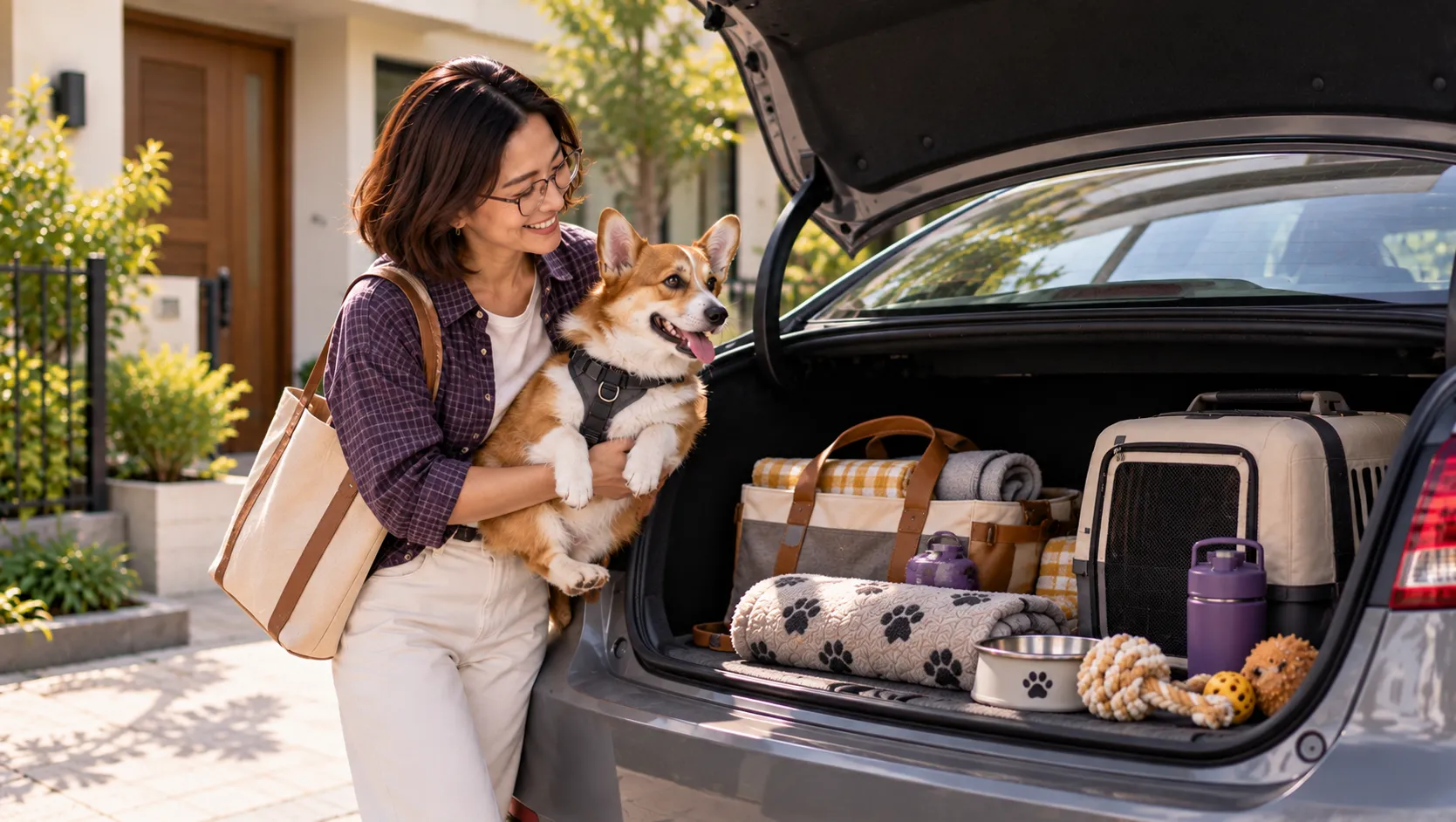
Pet Travel Checklist: A Quick Snapshot
Here is the quick version before we break each item down.
What to prepare
| Why it matters
| Quick check
|
|---|
Vet records and essentials
| Confirms your pet is ready and gives you key health information on the road.
| Records packed
|
Secure travel setup
| Reduces distraction and helps keep your pet contained during the drive.
| Carrier or restraint secured
|
Food and water
| Keeps meals and hydration predictable away from home.
| Enough for the trip + extra
|
Comfort and cleanup kit
| Make accidents, spills, and rest stops easier to manage.
| Towels, wipes, bags
|
Route and rest stops
| Gives your pet planned breaks instead of relying on last-minute stops.
| Stops mapped
|
Car and emergency prep
| Helps you deal with heat, rain, delays, or an unexpected vehicle issue.
| Vehicle thoroughly checked
|
1. Start With Your Pet's Health and Records
Before a long road trip, make sure your pet is fit to travel and that you have the information you may need if something goes wrong. For a nervous, elderly, very young, or medically sensitive pet, ask your veterinarian about the planned journey before you go.
Pack vaccination and health records, your veterinarian's contact details, and any current prescriptions. For trips involving a ferry or movement between major island groups, check the latest Bureau of Animal Industry (BAI) requirements ahead of time; BAI provides online services for Veterinary Health Certificates and Local Shipping Permits.
2. Use a Safe and Secure Travel Setup
Your pet should have a dedicated, secure place in the vehicle rather than roaming around the cabin or sitting on the driver's lap. Cats and smaller pets generally travel best in a properly ventilated carrier secured so it cannot slide around. For dogs, use a suitable pet restraint or secured travel setup appropriate to their size.
Do a short practice drive before the actual trip, especially if your pet is new to car travel. This can help you spot anxiety, motion sickness, or an unsuitable carrier before you are far from home.
At unfamiliar stops, secure a leash, harness, or carrier before opening the car door. A frightened pet can move quickly and disappear in seconds.
3. Pack a Pet Travel Kit
A dedicated pet bag keeps the things you need within reach. A practical dog travel checklist or cat travel checklist can include:
Food in a familiar brand and enough drinking water for the trip
Food and water bowls that are easy to clean
Leash, harness, collar, and identification details
Any prescribed medicines and your veterinarian's contact information
Towels, wipes, waste bags, cleaning supplies, and an extra blanket
A familiar toy or comfort item to make the car feel less unfamiliar
4. Plan for Food, Water, and Breaks
Keep your pet's feeding routine as familiar as practical. If your pet tends to get carsick, ask your veterinarian about feeding, travel timing, and any appropriate medication before the trip.
Plan regular breaks for water, toilet needs, and a safe stretch when appropriate. Build extra time into the route so the trip is not planned around the fastest possible driving time.
5. Prepare for Philippine Heat, Rain, and Traffic
Road trips in the Philippines can mean strong heat, sudden downpours, traffic buildup, and long periods of stop-and-go driving. Keep the vehicle comfortably ventilated or air-conditioned, avoid leaving your pet alone in a parked car, and keep towels or a washable cover handy for wet-weather stops.
6. Make the Car Part of Your Checklist
Your pet may be ready to go, but the vehicle needs to be ready too. Before a long drive, check tire condition and pressure, lights, essential fluid levels, emergency equipment, and the spare tire or tire-repair solution appropriate for your vehicle.
Car insurance does not replace maintenance or pet care, but it can provide a separate layer of financial protection for covered losses or damage, depending on the policy. Before you leave, review your coverage, limits, deductibles, exclusions, and claim requirements.
7. Have a Backup Plan
Even the best pet-friendly road trip can change. Save your veterinarian's contact details and, when possible, identify veterinary clinics near your destination or major stops in case traffic, weather, a delayed ferry, or a vehicle issue stretches the journey.
The Best Pet Travel Checklist Is the One You Actually Use
Traveling with pets by car does not have to be complicated. The goal is to remove avoidable surprises before you pull out of the driveway: prepare the documents, secure your pet, pack the essentials, plan your breaks, and check the car.
Disclaimer: Pet travel requirements can vary by route, carrier, destination, and current government rules. For inter-island travel, check the latest Bureau of Animal Industry requirements and confirm any additional requirements with the ferry operator or other transport provider before departure. Veterinary advice may also vary based on your pet's age, health, and travel history.