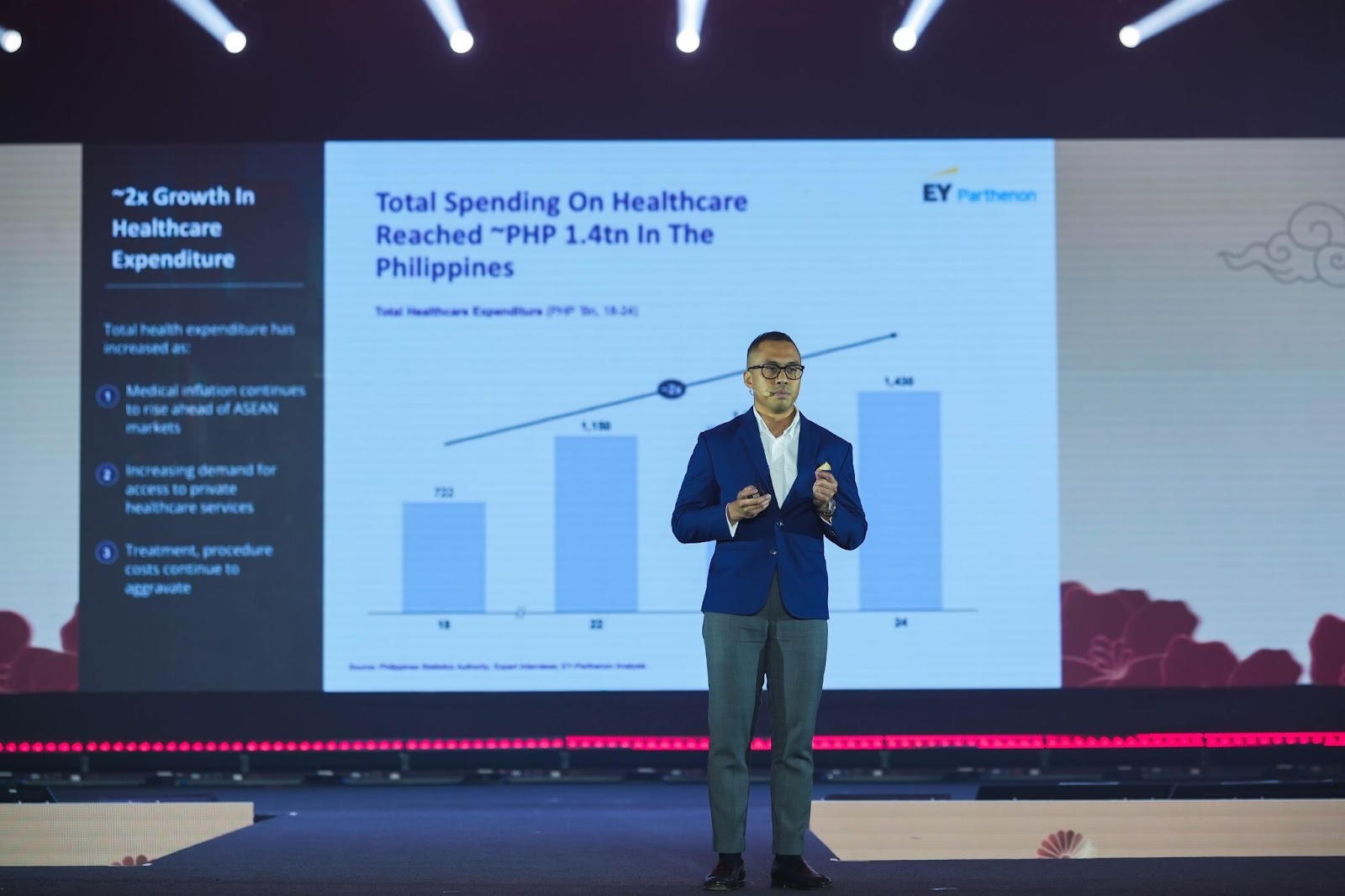
One of the key insights presented during the session by EY-Parthenon was the accelerating rise of healthcare costs, a trend that is increasingly reshaping financial planning conversations among high-net-worth individuals and families.
In the Philippines, healthcare expenditure has nearly doubled in recent years, reaching approximately ₱1.4 trillion in 2024. At the same time, medical inflation has climbed to around 19 percent, the highest rate in Southeast Asia. This means healthcare costs are rising faster than many traditional investment returns, creating new financial pressures even for affluent families.
Another emerging concern is the growing reliance on private healthcare. While private hospitals often offer greater access to specialist doctors, advanced treatments, and more comfortable facilities, the cost difference is substantial. Private inpatient and outpatient treatments can be 2.5 to three times more expensive than services in public hospitals.
These trends contribute to a growing out-of-pocket burden. In the Philippines, direct healthcare spending by individuals now accounts for nearly 45 percent of total healthcare expenditures, with out-of-pocket costs increasing by roughly 12 percent annually. For many families, this represents a silent but significant source of financial strain, particularly during serious or prolonged medical conditions.
Serious illnesses can also carry substantial financial implications. Treatments for major conditions such as cancer, one of the leading causes of mortality in the country, can range from ₱6 million to ₱7 million when diagnostics, treatment cycles, and long-term monitoring are included. Even with existing coverage from PhilHealth or employer-sponsored health plans, gaps in protection often require families to draw from personal assets to cover the remaining costs.
Building on these insights, Mylene Ong, Oona’s Group Chief Marketing Officer emphasized that healthcare risk has become an essential consideration in modern wealth planning.
She noted that a major illness today is no longer simply a medical event. Without adequate protection, it can trigger sudden liquidity pressures, force the liquidation of assets, and disrupt carefully structured financial plans designed to preserve wealth across generations.
Healthcare planning is also becoming more complex as more individuals seek treatment beyond their home countries. Cross-border medical care is increasingly common, particularly for specialized treatments available in regional healthcare hubs such as Singapore.
In response to these evolving needs, Oona Insurance introduced two international health protection solutions designed to complement wealth strategies.
Purple Shield provides peso-denominated coverage designed for individuals and families who primarily seek protection for treatment in leading private hospitals in the Philippines. Global Shield, on the other hand, offers U.S. dollar denominated coverage suited for globally mobile clients who may require access to treatment across multiple countries.
Both solutions aim to address the growing reality that health protection and wealth protection are increasingly interconnected.